Funding Disneyland
The $17 Million Dream!
The Playground of Capital
You could teach a hundred business classes on Walt Disney. The guy is a walking case study on taking massive animation risks, building intellectual property flywheels and generally bending the world to his will. But we aren't getting into all of that right now (maybe another day!). Today, we're going to Disneyland! Woo-hoooo!
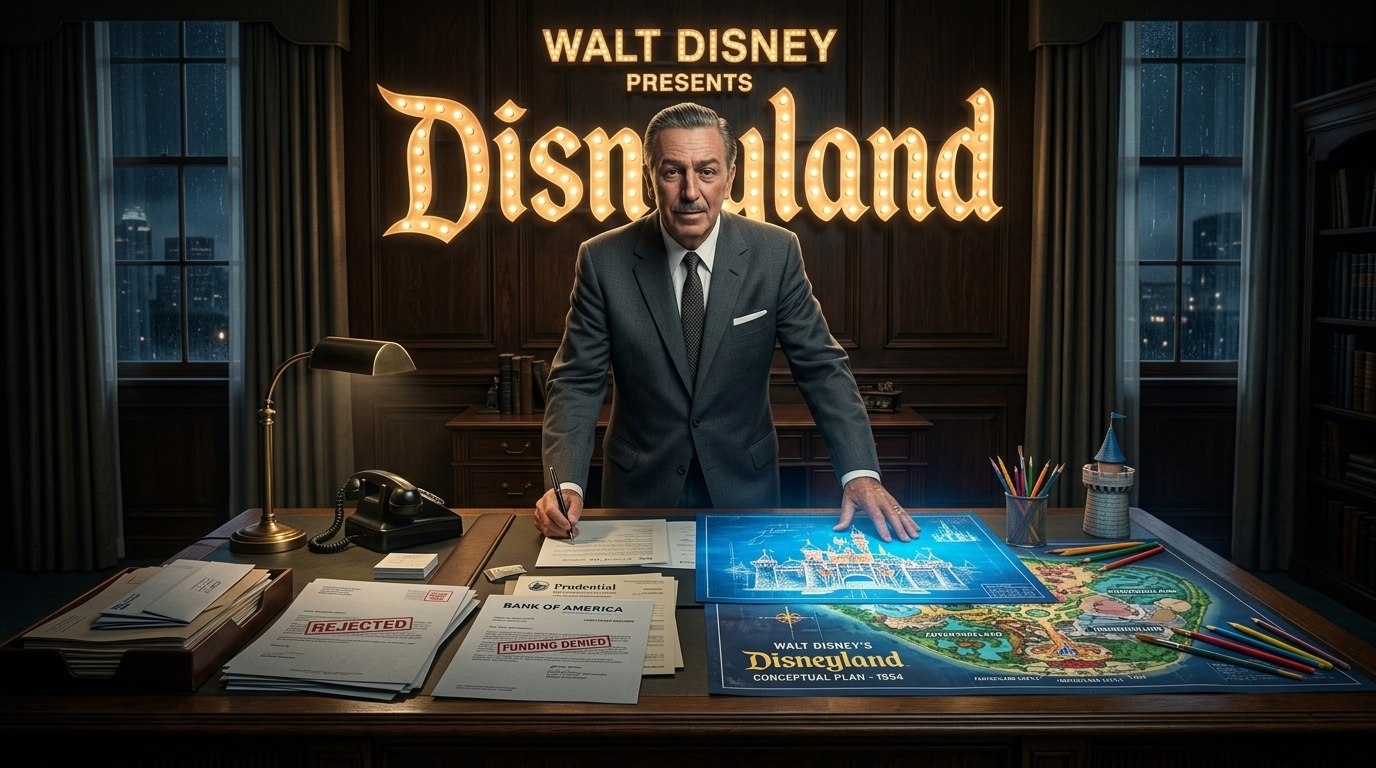
Let's set the scene. Walt wanted to build a literal, functioning municipality from scratch. We're talking about an unprecedented $17 million physical world. Here's the problem. Banks don't fund crazy. Back then, traditional lenders only handed over cash for proven, boring and static business models. Walt pitched a massive castle and a fake jungle - and the bankers laughed him right out the door.
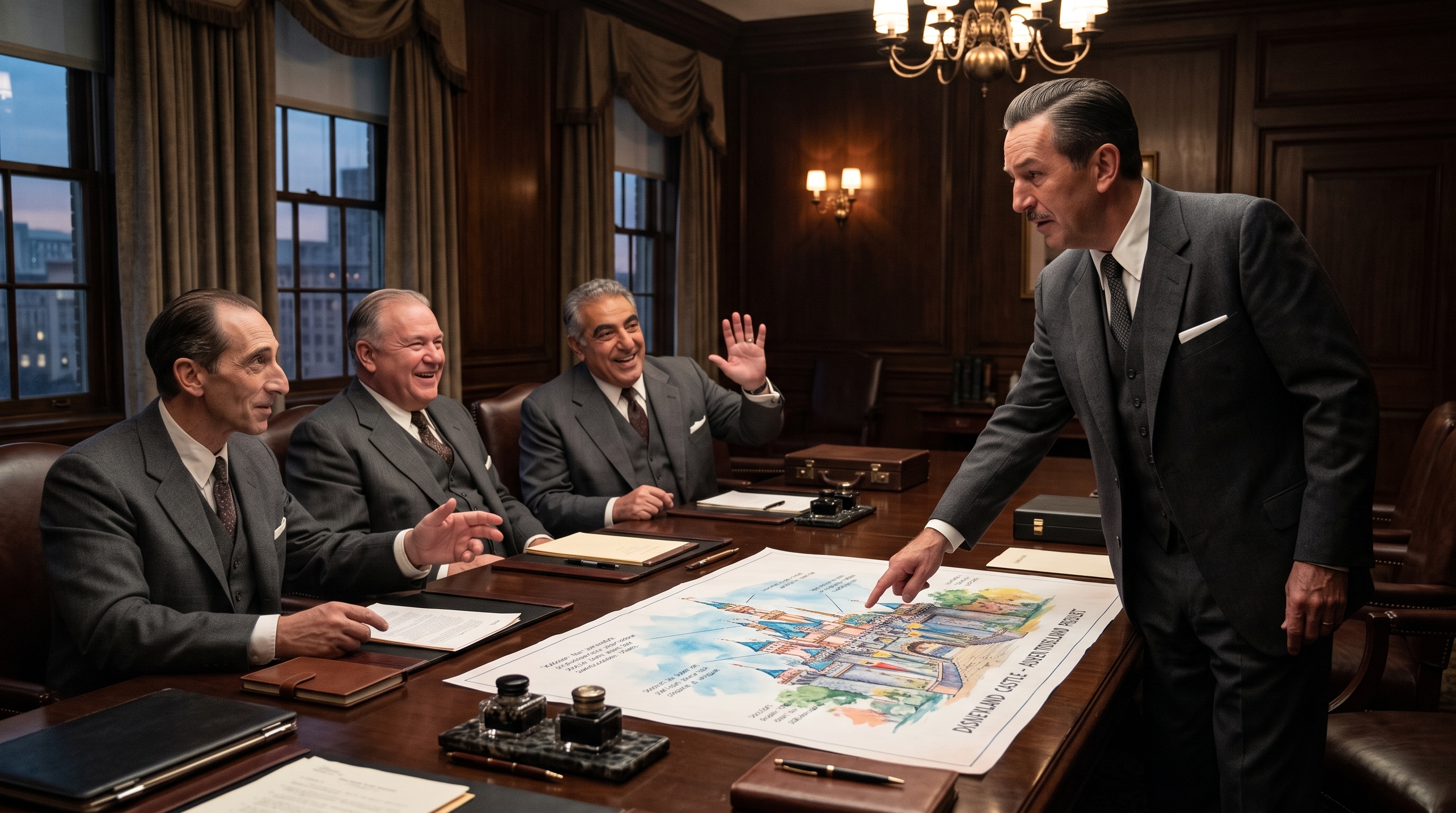
If you've ever had a lender reject your vision, you know exactly how much that stings (I've been laughed out of a few rooms myself, though usually for much worse ideas).
But it's totally ok when the traditional suits say no. When traditional banking shuts its doors, you don't pack up and quit. You hold yourself accountable to the dream and you get to work. Successful founders assemble their capital from non-traditional assets, strategic partnerships and future revenue.
The $10,000 Leash & The Life Insurance Pivot
The early 1950s were brutal for Walt Disney Productions. The studio was dragging around massive debt because movies like "Pinocchio" and "Fantasia" - despite being classics today - actually lost a ton of money at first.
For the executives running the show, there was absolutely zero room for speculation.
Then you had the cultural stigma. Back then, financiers looked at amusement parks and saw dirty, low-margin carnival operations. They didn't see a magical family destination. They saw a terrible investment. Enter Roy Disney. He was the money guy trying to keep the studio alive. To humor his brother without bankrupting the company, Roy put an incredibly tight leash on the project, officially capping theme park research at a completely impossible $10,000.
(If you've ever had a partner tell you to launch a massive business with pocket change, you feel Walt's pain right here).
Walt knew corporate bureaucracy would suffocate his dream, so he made a brilliant structural pivot. In December 1952, he formed WED Enterprises as a private company. This completely firewalled the public studio and shielded the nervous stockholders from liability. More importantly, it gave Walt the unrestricted design freedom he desperately needed.
With his creative engine isolated, Walt ignored Roy's tiny budget. He hired a research firm for $25,000 to run demographic algorithms and do the "roller-coaster math". His data pinpointed the epicenter of future growth, and they locked down a 160-acre parcel of Anaheim orange groves for just $4,500 an acre.
When it came time to fund it, the initial pitch was a $5 million projection. It was deliberately low just to placate the conservative debt markets. The banks still didn't bite. Bank of America and Bankers Trust took one look and completely balked. Wall Street had a strict rule. They believed amusement parks without roller coasters were mathematically guaranteed to fail. The risk was so wild that his own brother Roy started calling the project "Walt’s Folly".
With the traditional front door locked, Walt kicked down the back door.
He started liquidating his personal wealth and even sold off his vacation home in Palm Springs. But the real genius was how he leveraged his life insurance. Walt and Lillian had whole life insurance policies. If they borrowed directly from the insurers, they'd eat a standard 6% interest rate. Walt didn't do that. Instead, he took the policies to Commerce Trust in Kansas City. He used the cash value as collateral to secure a $60,000 loan at a tiny 2% interest rate.
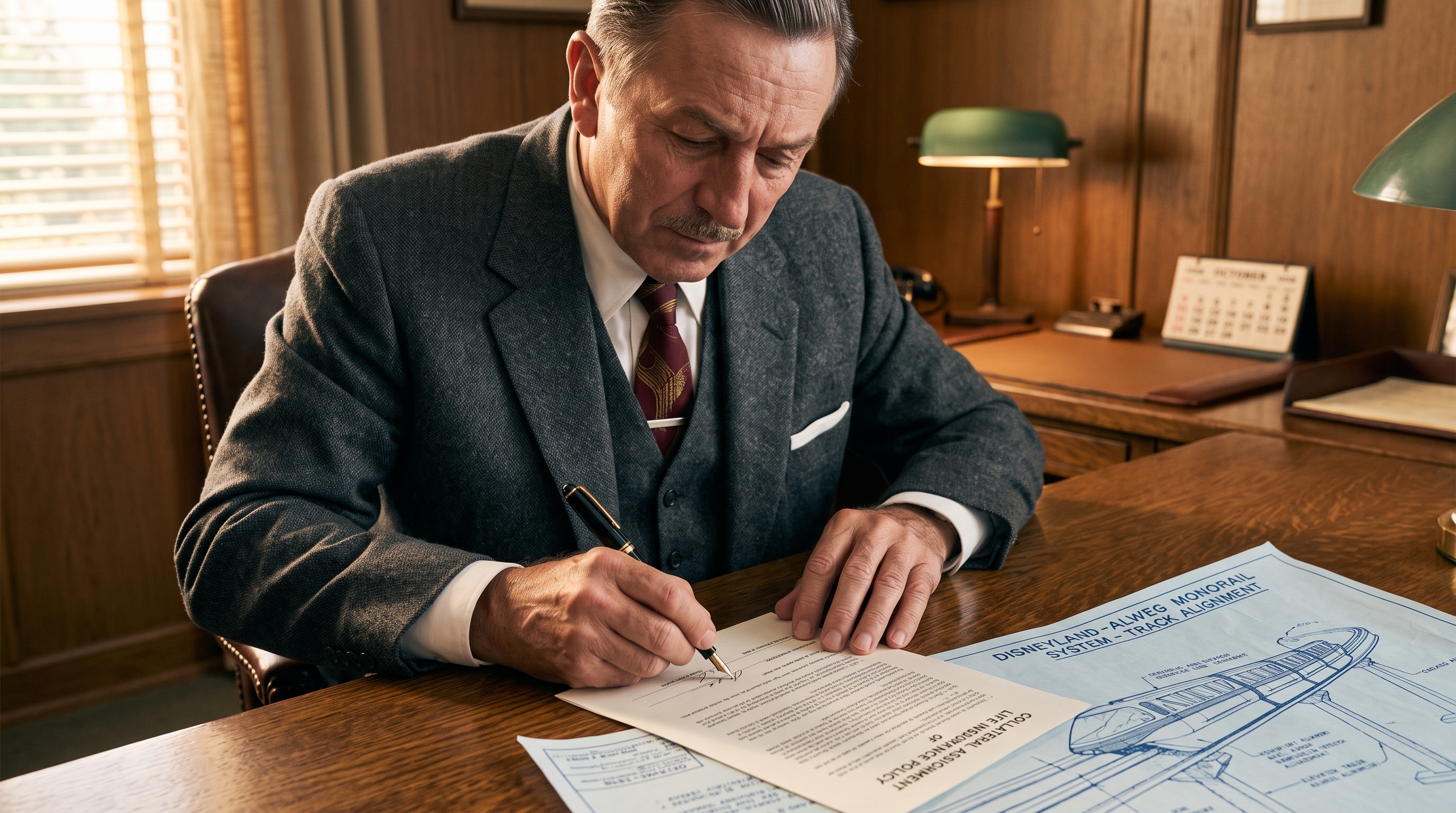
(That is exactly how you bypass the system when the rules don't work for you).
Between the house and the policies, Walt injected $250,000 of his own cash to grab a 16.55% stake in the newly formed Disneyland, Inc..
Dropping that much personal cash on an unproven theme park is terrifying. Lillian was absolutely furious. To pacify her and keep the peace at home, Walt cut a deal, granting her a 15% return on all park merchandise bearing his name.
But Walt also protected himself. He hedged his bets perfectly through WED Enterprises. He retained direct, private ownership of the park's railroad and monorail systems. Plus, he locked in a 10% royalty on the licensing of his own name. He built a private cash engine that paid him out regardless of what happened to the overall corporate margins.
The Network Standoff
Walt needed heavyweight capital to actually build this thing. So, he pitched the giant broadcast networks.
They completely blew him off.
William S. Paley at CBS dismissed the whole project as "just another Coney Island" and literally stood the Disney brothers up at a crucial meeting.
Next, they went to NBC. David Sarnoff desperately wanted Walt's TV content but flat out refused to touch the real estate. He famously barked, "I want your television show, but why the hell do we have to take that damned amusement park?".
(When the guys at the top tell you no - it's usually because they lack the vision to see what you're actually building).
Walt didn't quit. He just pivoted to the underdog and approached Leonard Goldenson at ABC.
Back then, ABC was dying in dead last place. Industry insiders literally called it the "Almost Broadcasting Company". They were absolutely desperate for a hit, and Walt knew exactly how to leverage their pain.
On April 2, 1954, they locked in a massive landmark agreement.
ABC handed over $500,000 in cash for a 34.485% equity stake in the park. More importantly, they guaranteed $4.5 million in commercial bank loans. That guarantee was the magic bullet that finally forced the traditional banks to open their wallets.
But ABC didn't do it out of the goodness of their hearts. They demanded a 10-year exclusive monopoly on all food and beverage concession profits inside the park.
When the dust settled, the Disneyland, Inc. pie was sliced four ways. Walt Disney Productions held 34.48%, ABC grabbed 34.485%, Walt personally held 16.55% and Western Publishing filled the gap with 13.80%.
Here is the absolute masterstroke. Walt signed a 7-year TV contract with ABC paying him $5 million a year.
He effectively got the network to pay him millions to run an hour-long, self-liquidating weekly advertisement for his own theme park.
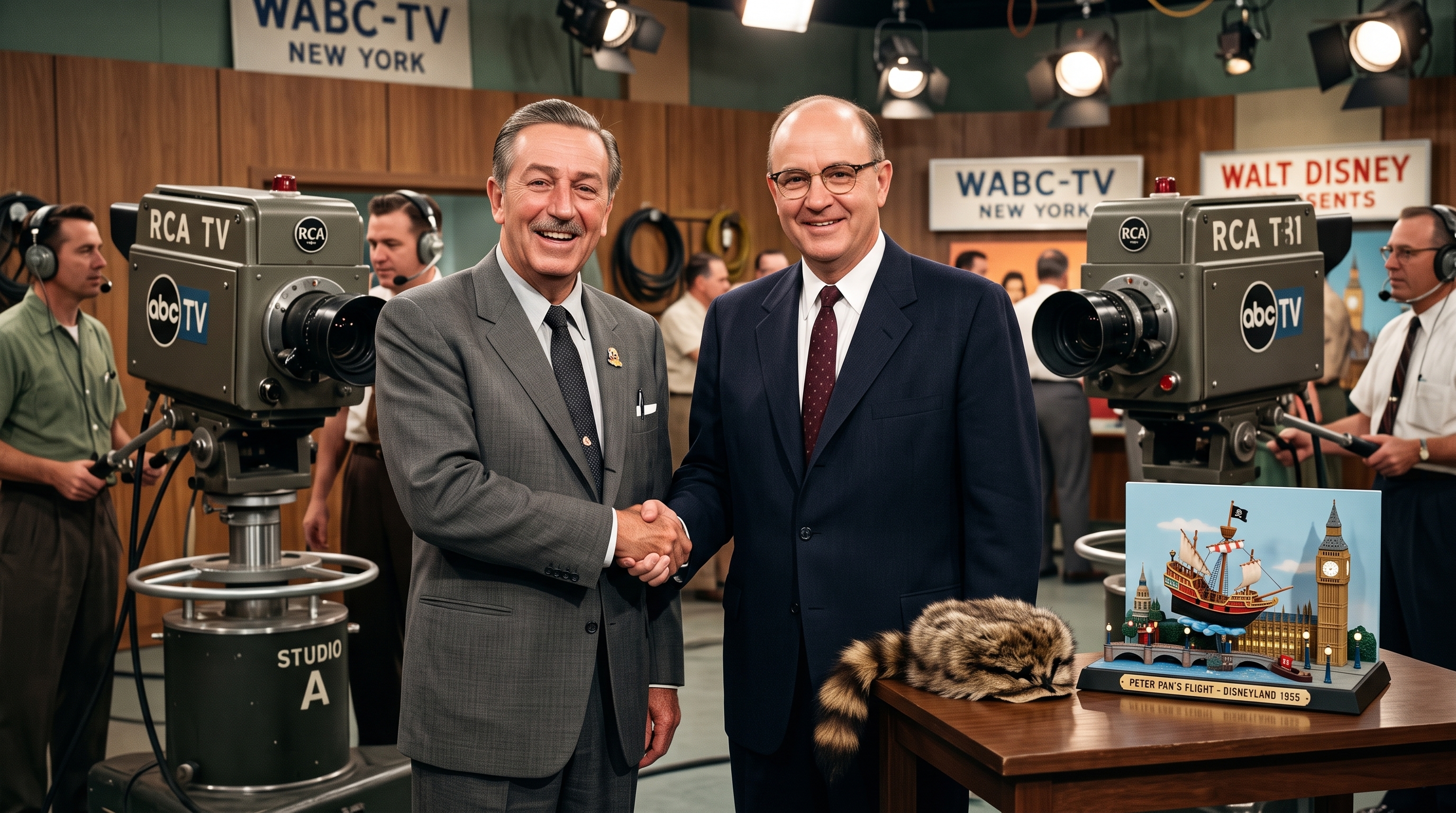
The impact was insane. The show's Davy Crockett episodes sparked a wild national craze, selling $300 million in merchandise in 1955 alone. That massive wave of indirect cash pumped right back into the Disney ecosystem, keeping the entire dream alive.
The $17 Million Reality Check & Corporate Crowdsourcing
You know that original $5 million pitch? It fell apart almost immediately.
The main contractor took one look at the wild sketches on the wall and bumped the estimate up to $9 million. But because Walt constantly changed his mind and demanded on-the-fly revisions, that number completely exploded. By opening day, the actual cost hit a staggering $17 million.
(If you've ever tried to renovate a kitchen, you know exactly how fast a budget blows up - now imagine doing it with a fake jungle and a massive castle).
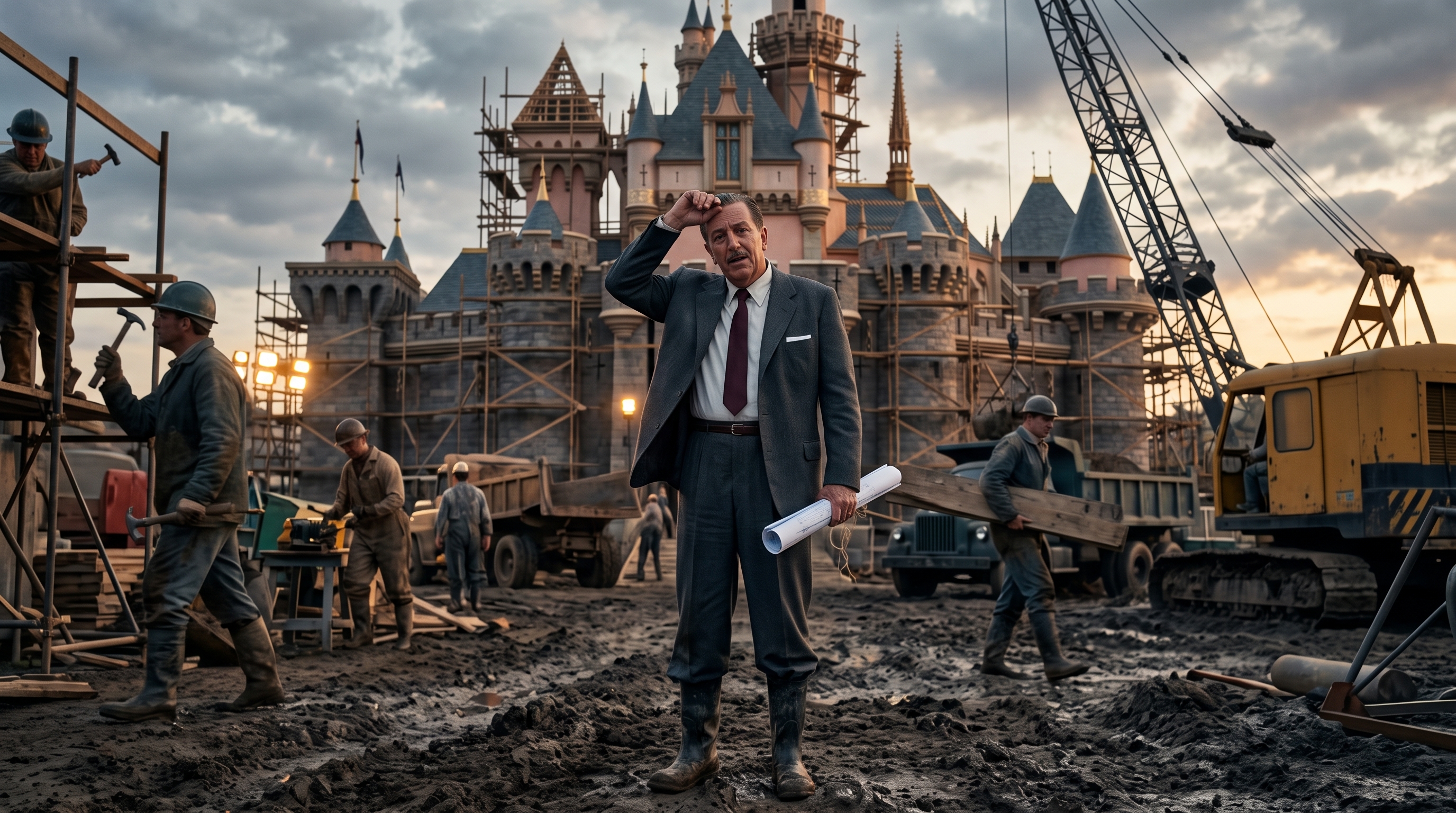
Building a fake world in the real world is brutal. They had a non-negotiable 365-day construction schedule. That meant throwing over 800 workers across 60 different subcontractors at the dirt every single day. Add in 29 competing labor unions fighting over jurisdiction, and you have a recipe for pure chaos.
To hit that opening day deadline, Walt had to bleed cash. Workers were pulling round-the-clock shifts and hitting "golden time" premium pay. Some of these guys were taking home nearly $1,000 a week in 1955.
Then a national plumbers' strike hit right before the gates opened. Walt was faced with a brutal ultimatum. He had to choose between finishing the bathrooms or finishing the drinking fountains. Facing a massive heatwave, he pragmatically chose the bathrooms.
All of this threw the back office into a total panic. The accounts payable team was shoved into a cramped, dark office they dubbed "The Snake Pit".
The bookkeepers were literally drowning. They sat there trying to process three massive tubs filled with $17 million in unpaid vendor invoices. The initial seed money was completely gone - and they were staring down a massive financial cliff.
Walt didn't have the cash to cross the finish line. To bridge that massive capital gap, he tapped into a brilliant commercial real estate loophole: tenant-improvement leases.
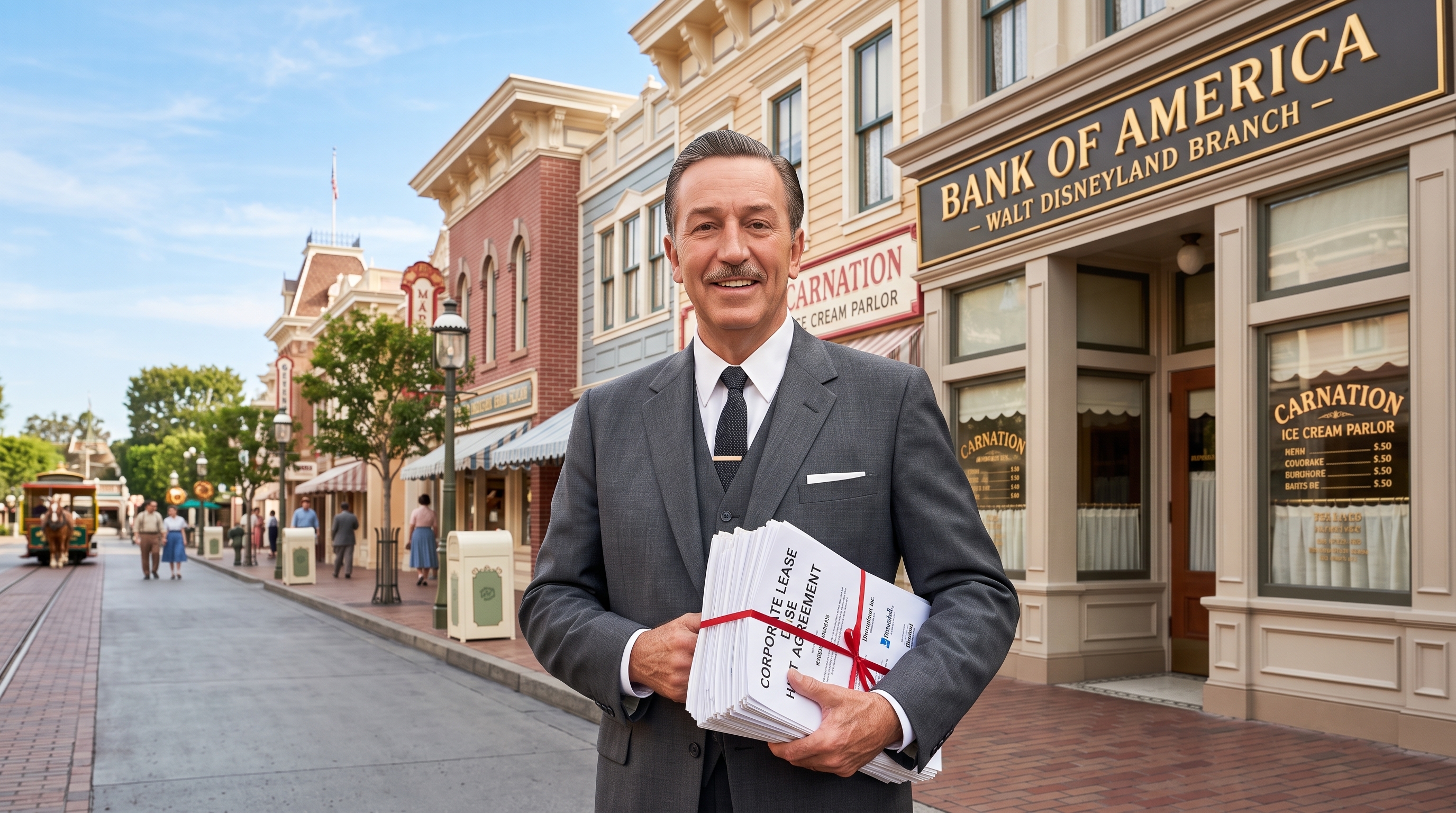
His team went out and aggressively pitched major American brands to open shop inside the park. Russel Tippett and George Whitney hit the pavement and managed to lock down 33 original corporate sponsors.
The economics on these deals were absolutely wild. If a company wanted an in-line facility, they paid $40,000 a year. If they wanted a custom pavilion, it cost them $100,000 a year.
But here's the real genius - the corporate tenants also had to foot 80 to 90 percent of their own construction costs.
The biggest brands in the world happily opened their wallets. Carnation bought a dairy monopoly inside the park. Eastman Kodak, TWA and Pepsi-Cola all funded their own footprints.
Bank of America even built a fully functioning branch right on Main Street. More importantly, they stepped in to float the bleeding company by providing a critical $9 million participation credit facility alongside Bankers Trust.
(That is exactly how you leverage relationships to keep the lights on).
Walt effectively crowdsourced the final construction costs. He retained total ownership of the underlying land, but he used massive corporate balance sheets to actually finance the physical buildout of his dream.
Black Sunday to Black Ink
Disneyland officially opened on July 17, 1955. Walt literally called it "Black Sunday".
The asphalt was so fresh and soft that women's high heels sank right into the street. They planned for 15,000 guests, but counterfeit tickets flooded the gates and 33,000 people showed up. Rides broke down and the restaurants completely ran out of food.
(If you've ever had a product launch go sideways - at least you didn't trap your clients in melting pavement).
Despite the operational nightmare, the financial engine was an absolute monster. They charged $1.00 at the gate just to walk in. Once inside, you paid cash for every single ride.
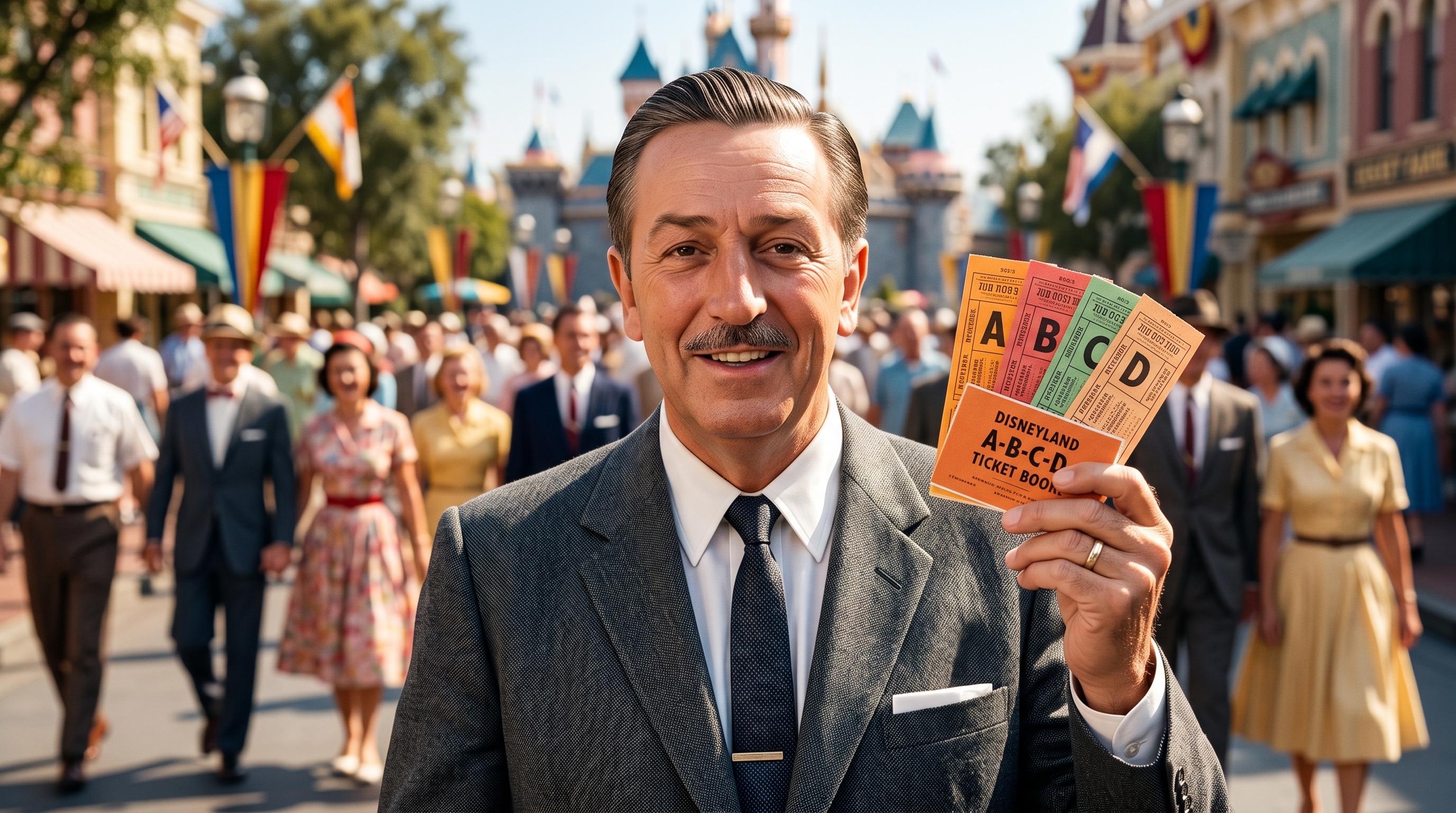
By October 1955, they got smart and rolled out the famous Ticket Books for $2.25. This forced families to prepay for attractions in bulk, dumping a massive wave of upfront cash right onto the balance sheet.
The traffic was insane. They hit 1 million guests in just seven weeks. By the end of year one, 3.6 million people had visited. The park grossed $11 million and cleared over $1 million in pure net profit.
Walt didn't want to share his cash cow forever. In 1960, Disney bought out ABC's 34.485% equity stake for $7.5 million. He drained $2 million in cash from the park and financed the remaining $5.5 million with five-year notes. ABC walked away with a 15x cash return, and Walt reclaimed total control.
(As a hilarious final flex - Disney got so big they eventually just bought the entire ABC network decades later for $19 billion).
The Modern Funding Playbook
Fast forward to today. The brutal truth is that traditional bank underwriting hasn't changed much since the 1950s. They are still entirely backward-looking. They rely on static scorecards and rigid templates to tell them if a deal is safe.
If your business doesn't fit perfectly into their little box, they hit reject - and that's totally ok.
(I've stared down my fair share of those rejection letters, and it never gets less annoying).
But here's the secret you need to understand. When a standard commercial lender rejects a perfectly viable enterprise, the business isn't dead. The financing structure is simply incomplete.
Stop begging legacy bank underwriters for permission to grow. You have to build your own capital stack. Today, you do that by combining 0% introductory credit options, smart asset leverage and alternative credit structures. You build automated digital funnels to pre-screen deals and find the backdoor when the front door is locked.
You don't need a guy in a suit to validate your vision. You just need the right alternative financial tools and the guts to actually use them. Hold yourself accountable, respect your own hustle and go fund your dream.
Learn more at https://7FiguresFunding.com and https://MyFundingMachine.com!