Nike's $225 Billion Distraction
What Nike's 80% Collapse Teaches Us About Protecting the Main Thing
The $225 Billion Smoke Screen
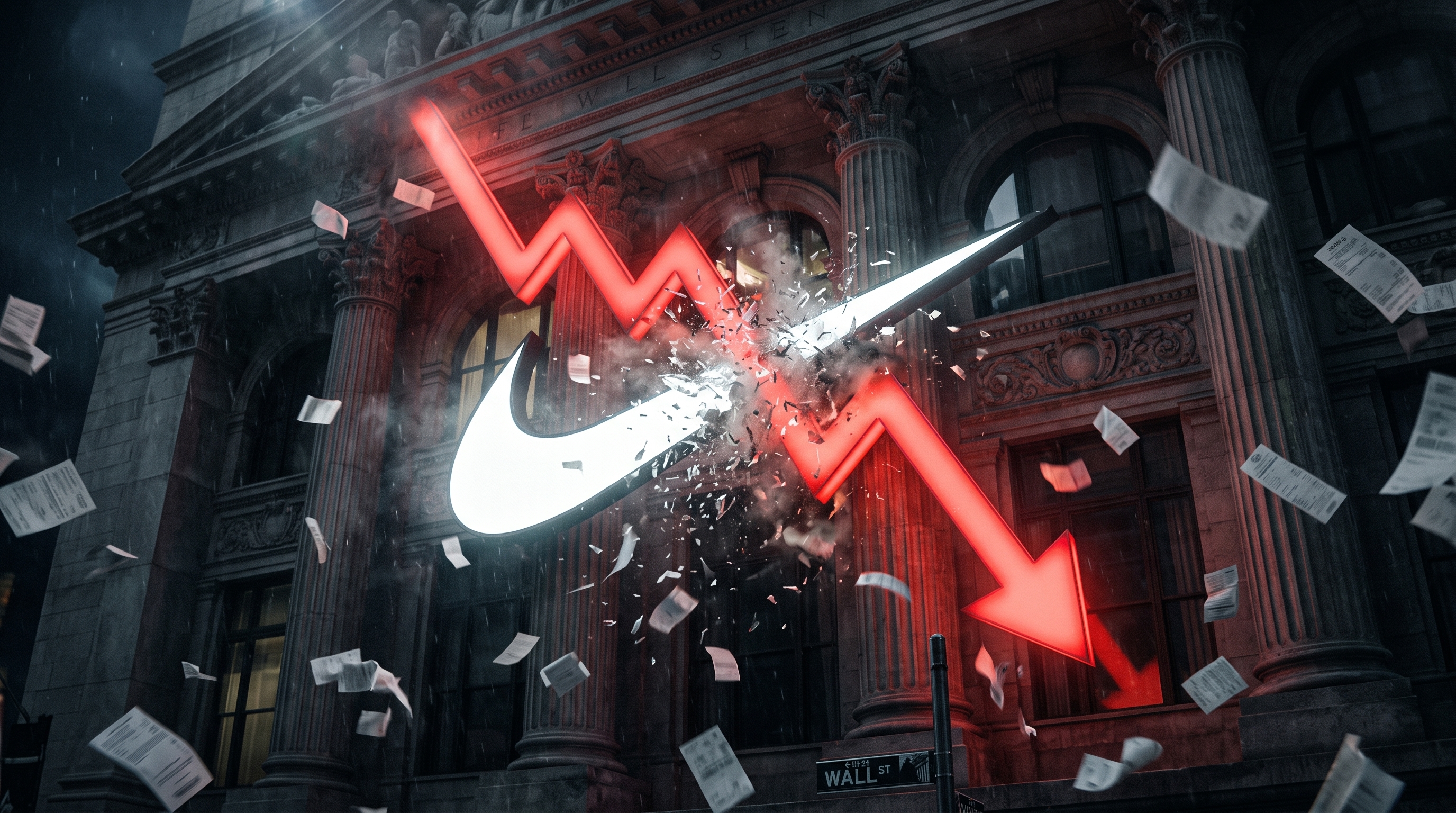
On November 5, 2021, Nike sat on top of the world. The stock hit an all-time high of $177.51 per share and the company carried a massive $281 billion valuation. They looked untouchable. But by October 2, 2026, that exact same stock plunged to a humiliating 12-year low of $33.87. That isn't just a bad quarter, ok? That is an absolute bloodbath.
Over the span of 59 months of brutal missteps, Nike's market cap shrank down to roughly $56 billion. They literally vaporized over $200 billion in shareholder value. We're talking about an 80% destruction of equity because the executives running the show forgot what actually pays the bills.
Wall Street noticed the distraction and punished them for it. They rerated Nike from a high-flying 50x price-to-earnings multiple in 2021 down to 24x underlying earnings in 2026. The market completely stripped the company of its premium brand status. I honestly love seeing the market humble a giant - it proves absolutely nobody is immune to the brutal rules of business.
The real damage is happening quietly behind the scenes. In fiscal 2026, Nike generated only $2.18 billion in free cash flow. The problem is they carry a massive $2.4 billion dividend bill. To avoid alarming investors by slashing that payout, they're forced to quietly drain their cash reserves just to hand checks to their shareholders. They're actively bleeding out from the inside.
The Political Suicide Mission and the Empty Shelves
Nike used to sell athletic dominance and winning. Then they decided to become some version of a moral compass. Instead of focusing on footwear engineering, they pivoted to delivering social lectures that alienated the exact everyday sports fans who actually buy, or used to buy, their gear.
It started with the 2017 "Equality" campaign, preaching corporate slogans like "the ball should bounce the same for everyone." By 2018, they centered their 30th anniversary "Just Do It" campaign around Colin Kaepernick. It instantly turned off millions of core consumers who tune into sports to escape political warfare, not get lectured by a sneaker company.
They doubled down in 2020 with the "For Once, Don't Do It" ads, deciding to lecture working-class Americans on social justice. Then came the baffling 2023 decision to partner with Dylan Mulvaney to promote women's sports bras and leggings - completely ignoring the massive Bud Light fallout happening at the exact same time.
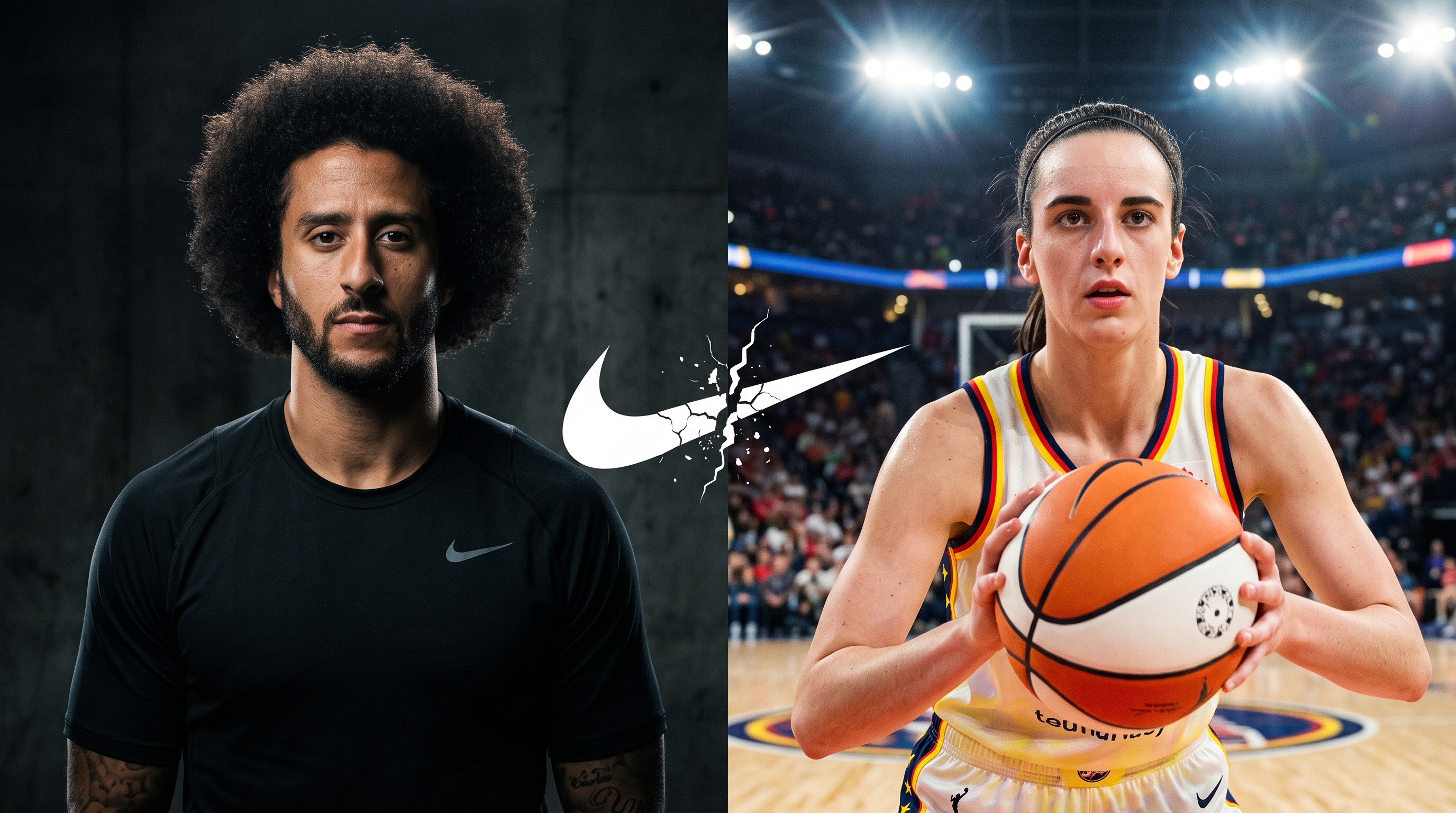
But the ultimate unforced error was the Caitlin Clark demand disaster. Despite Clark ranking first in jersey sales and driving historic consumer demand, Nike stalled her signature shoe until June of 2026 so they could debut A'ja Wilson's sneaker first. They let internal identity politics strangle tens of millions of dollars in instant revenue. I've watched business owners do some incredibly stupid things, but actively refusing to sell your hottest product to satisfy the HR department is next-level arrogance.
While the marketing team was busy virtue signaling, the operations side made things even worse. Nike launched their Consumer Direct Acceleration push, deliberately cutting ties with wholesale partners like Macy's, DSW and Urban Outfitters to force everyone into their digital apps. By abandoning prime physical shelf space, they left a massive vacuum. Fast-moving competitors stepped right in. Hoka grabbed that empty retail space and ripped off four straight years of 50%-plus growth to become a $1.8 billion powerhouse. On Holding swooped in and captured the premium running category.
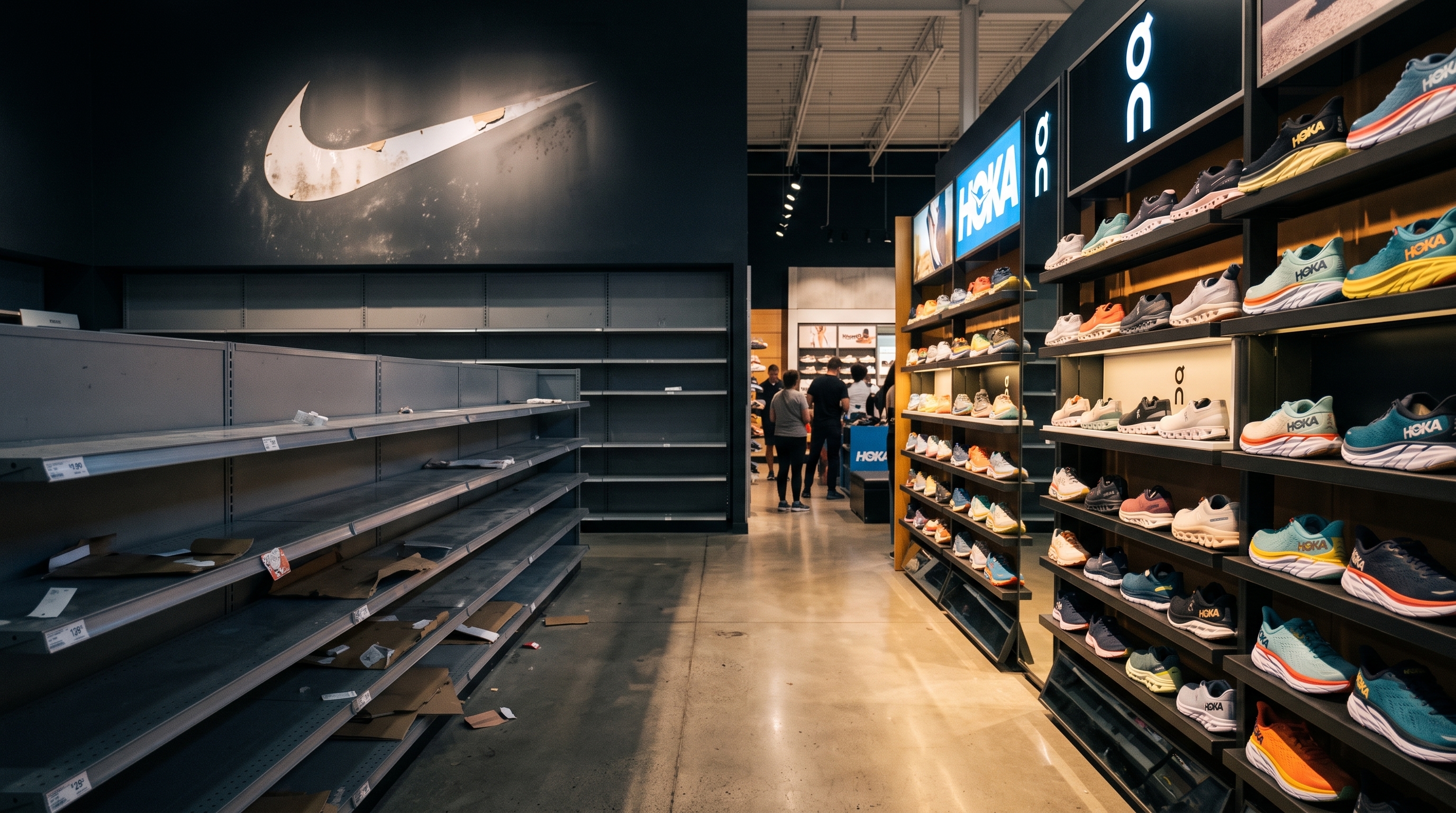
To make matters worse, digital advertising costs surged 60% across the board. With all that inventory stuck on their own apps, Nike had to rely on aggressive discounting to clear the backlog. That wrecked their pricing power and trained consumers to just sit back and wait for a sale.
The numbers from their first quarter of fiscal 2027 show the bleeding. Total revenue missed expectations and fell 4% to $11.21 billion. Sales in Greater China plummeted 26% to $1.18 billion. The Converse brand plunged 28% to $263 million. To cover the gaps, they flooded the market with retro re-releases of the Air Force 1, Nike Dunk and Air Jordan 1. All that did was destroy the exclusivity and prestige of their biggest profit drivers.
The 860-Word White Flag
On October 1, 2026, new CEO Elliott Hill sent an 860-word internal memo to his global employees. It was basically a corporate white flag. Out of all that jargon, 33 words stood out: "Over the past year, we've put sport at the center of everything we do. We're seeing encouraging signs of progress, but we have more work to do to win over the long term." Let's call that exactly what it is. It's a quiet admission that they spent the last few years putting literally everything except sport at the center of their business. I've had to eat crow before, but swallowing a mistake this expensive in front of your entire company has to sting.

Now they're scrambling to clean up the mess with a massive overhaul they call the "Pace" initiative. They're dismantling their bloated matrix structure into three lean geographic units: Americas, APGC (Asia Pacific and Greater China) and EMEA (Europe, Middle East and Africa). To slash labor costs, they're offshoring a ton of operational roles across Nike, Jordan and Converse to a new corporate technology campus in Bengaluru, India.
The financial math on this turnaround is brutal. The Pace plan targets $2.5 billion in cost savings through 2031, but you don't get to restructure a global empire for free. It requires $1.6 billion in pre-tax restructuring and severance charges - that breaks down to $300 million in 2026, another $300 million in 2027 and $1.0 billion through 2031.
The real cost is human. They already eliminated over 1,600 jobs in February 2024 and ran a second round of cuts in August 2025. Now, Hill confirmed a third wave of layoffs will hit the staff in 2027. That is the real price you pay when the executives in charge lose focus on the main thing.
The 27-Day Death Trap
It is easy to look at a giant corporation and think you can play the same game. You can't. Nike has a massive $8.4 billion cash and short-term investment cushion sitting in the bank. They can survive losing $225 billion in value, fire thousands of employees and still keep the lights on. You do not get that luxury. If you run a regular business and lose focus for six months, you just go bankrupt.
Let's look at the actual math. According to the JPMorgan Chase Institute, the median small business holds just $12,100 in cash. That represents a median cash buffer of exactly 27 days. If revenue stops, retail stores survive just 19 days. Restaurants last 16 to 19 days. Construction firms hold out for 20 days. If you happen to be in the bottom 25% of businesses, you have fewer than 13 days of cash before total insolvency. (I've been in that exact spot sweating over a Friday payroll, and it is an absolutely brutal way to live).
People like to think businesses fail because of bad ideas or a lazy work ethic. The reality is much colder. U.S. Bank and SCORE research shows that 82% of all small business failures are directly caused by cash flow exhaustion and liquidity mismanagement. It's just bad math.

When you realize your current model is failing and you try to course-correct, your cash conversion cycle instantly widens. You decide to overhaul your marketing, change your product line or restructure your team. The transition expenses hit your bank account immediately, but the new incoming revenue pauses. You burn straight through that 27-day cash cushion before your new offer can even generate a single dollar of cash flow.
So you go to a traditional bank for help. They look at your shrinking margins and shut the door. Federal Reserve data shows that 58% of small businesses applying for commercial bank loans get shortchanged. About 36% receive only partial funding and 22% walk away with absolutely zero. The large banks fully approve only 44% of applicants.
Even if you get the money, commercial credit lines are loaded with restrictive debt covenants. The second your business hits a rough patch, banks use those covenants to freeze or revoke your credit line right when you need the capital most. When the bank pulls the rug out, business owners are forced to substitute 68% of that denied financing using their own personal credit instruments. You end up risking your family's financial future just to keep the doors open.
It doesn't have to be this risky. The National Bureau of Economic Research proved that access to immediate, low-cost liquidity makes businesses 61% less likely to declare bankruptcy after three years. It also cuts severe delinquency rates by 33%. Capital buys you the time to fix the problem.
This is exactly why we use credit card stacking as the modern survival stack. By properly sequencing 0% introductory APR business lines, you can secure $50,000 to $150,000 in interest-free capital for 12 to 15 months. This buys you the multi-month cash buffer required to pivot, fix your marketing and scale - all without restrictive bank covenants threatening to shut you down.
Radical Accountability and the Main Thing
Let's get one thing straight. You need to stop playing corporate vanity games when you don't have corporate cash reserves. Nike (as embarrassing as it is) can afford to lose focus, indulge personal ego and chase trends that alienate their paying customers because they have billions in the bank to catch them when they fall. You don't have that luxury.

You have to keep the main thing the main thing. That means a ruthless focus on revenue. You deliver exactly what the market actually buys - and you protect your margins at all costs. Nobody cares about your ego when Friday payroll hits!
Take radical accountability for your cash reserves before a crisis forces your hand. Go check out the free Funding Machine case study right now. You'll see exactly how real business owners secure 0% business credit lines and build an unbreakable capital foundation. Stop playing games and start acting like the house.